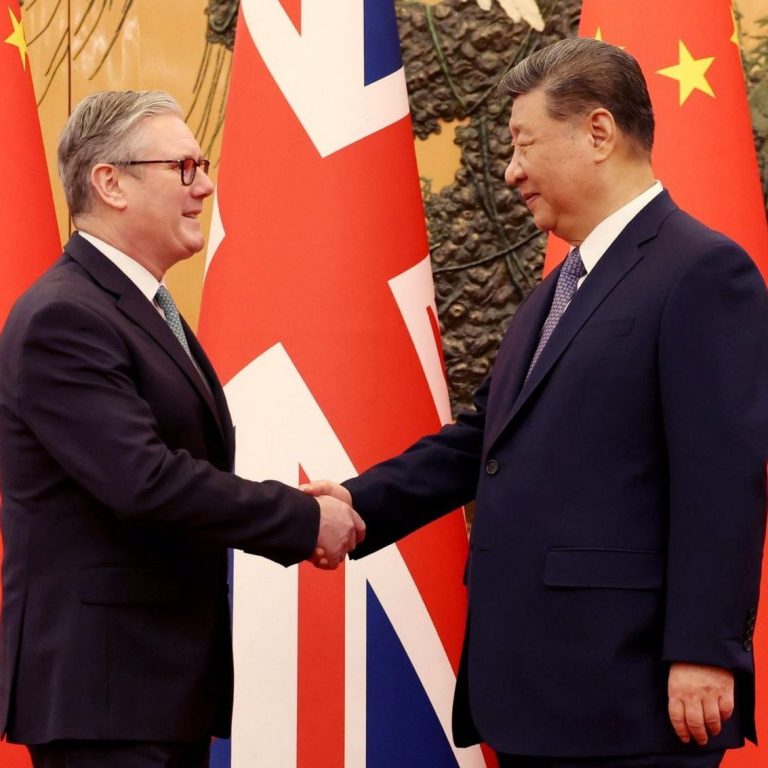
Prime Minister Sir Keir Starmer’s official visit to China from 28 to 31 January 2026 marks a significant diplomatic reset, being the first such trip by a British leader in eight years. Beyond the headlines of trade deals and visa-free travel, the visit has sent a powerful signal of stability to the higher education and research sectors, paving the way for deeper academic cooperation between the two nations.
Strengthening Research and Education
Education and scientific exchange were core pillars of the bilateral agenda. A standout development was the announcement that the University of Nottingham and the University of Nottingham Ningbo China (UNNC) will jointly establish a Division of Life and Health Sciences. This initiative aims to tackle global health challenges by combining world-class expertise in pharmacology, psychology, and biomedical engineering.
The Mutual Value of Academic Interdependence
The deepening of ties offers a unique "win-win" scenario. For UK institutions, China represents an indispensable source of STEM talent and research funding. With China’s massive investment in R&D, British universities gain access to state-of-the-art facilities and large-scale data sets—particularly in genomics and renewable energy.
Conversely, Chinese universities benefit from the UK’s tradition of academic rigour and creative enquiry. This synergy creates several key advantages:
Global Employability: Graduates who understand both British and Chinese corporate cultures are highly sought after by multinational corporations.
Solving "Grand Challenges": Issues like climate change cannot be solved in isolation. Closer ties allow for synchronised research efforts, ensuring breakthroughs are scaled rapidly across both markets.
Resilient Funding: Joint ventures, such as the University of Liverpool's partnership with XJTLU, create robust financial models that support innovation.
Pragmatic Collaboration for a Global Future
By moving away from "inconsistency," the UK government is embracing a consistent and strategic partnership. This shift is essential, as China is now a global technology superpower leading in AI and green technology.
Ultimately, Starmer’s visit reinforces the idea that education serves as a bridge. As noted by China Daily, academic cooperation remains a vital channel for mutual understanding in an uncertain world. For "Knowledge News Hub," this visit isn't just about politics—it's about the future of global innovation.
Knowledge Without Borders: A New Chapter for PM Keir Starmer’s China Visit and the Future of Academic Synergy
We use a third-party service to translate the website content that may collect data about your activity. Please review the details in the privacy policy and accept the service to view the translations.
This site uses third-party website tracking technologies to provide and continually improve our services, and to
display advertisements according to users' interests. I agree and may revoke or change my consent at any time
with effect for the future. Configure